

The VR arcade industry has become one of the fastest-growing segments within the entertainment economy. According to Statista, global VR headset shipments exceeded 20 million units in 2024, and consumer spending on VR-based attractions is increasing by over 25% annually. North America and Europe remain strong markets with robust infrastructure, while Asia—particularly China, Japan, and South Korea—has emerged as the leading growth engine due to its large population and high adoption rates.
Regional adoption patterns highlight interesting differences. In the United States, VR arcades are often integrated into malls and family entertainment complexes. In Japan and South Korea, large-scale VR theme parks have become tourist destinations in their own right. Emerging markets in Southeast Asia and the Middle East are beginning to experiment with VR arcade attractions, often tied to cultural and tourism initiatives.
The VR arcade market demand can be grouped into three major categories:
✅ VR Amusement Parks: Large venues combining VR roller coasters, motion simulators, and immersive theaters, often positioned as tourist hotspots.
✅ VR Arcades: Compact centers in shopping districts, offering short, repeatable VR experiences with high turnover rates.
✅ VR Simulators and Rides: Standalone attractions deployed in amusement parks, exhibitions, and cultural centers to enhance visitor engagement.
Each of these segments reflects different VR consumer insights. Families are drawn to amusement parks for group activities, while young professionals favor arcades for quick entertainment. Tourists, on the other hand, are attracted to VR simulators that extend cultural or educational experiences.
Young adults (18–35 years old) are the most active participants in VR arcades, with penetration rates above 70% in developed markets. Families with children also show strong demand, as VR attractions provide safe and engaging activities for all ages. Older demographics are gradually adopting VR for cultural and educational purposes.
In Asia, consumers prefer high-energy VR simulators and multiplayer arcades. In Europe, cultural and historical VR experiences are more popular. North America shows strong interest in competitive VR gaming, while emerging markets often use VR for tourism-driven experiences.
According to PwC, 35% of consumers are more engaged when entertainment includes immersive elements. Motivations include the desire for new experiences, social interaction, and personal expression. Parents value VR as a family-friendly attraction, while younger audiences prioritize excitement and novelty.
Surveys show that 60% of VR arcade customers return for repeat visits within six months. Consumers typically spend longer at VR attractions compared to traditional arcades, with average session times of 20–30 minutes. These insights demonstrate strong customer loyalty when experiences are engaging and regularly updated.
The rollout of 5G, improvements in motion tracking, and integration of AI are reshaping VR entertainment trends. These innovations enable smoother gameplay, lower latency, and more realistic simulations, driving consumer adoption.
Post-pandemic, consumers are prioritizing experiences over material goods. A Deloitte study revealed that 65% of millennials prefer to spend on activities rather than products, fueling demand for VR arcades and related attractions.
Falling hardware costs and increased investor interest are fueling global growth. Governments in China, the UAE, and Singapore have launched initiatives supporting immersive entertainment, further boosting VR arcade market demand.
In Tokyo, a VR theme park attracted over 500,000 visitors in its first year, driven by unique VR roller coasters and collaborative adventure games. In the U.S., a leading arcade chain reported a 30% revenue increase after introducing VR simulators.
Cultural sites in Europe now use VR rides to recreate historical experiences. For example, a museum in Rome implemented a VR simulator allowing visitors to “walk through” ancient streets, which boosted attendance by 20%.
Success depends on balancing novelty with accessibility. Attractions that are too complex may alienate casual visitors, while repeat customers demand fresh content. This highlights the importance of continuous innovation in VR entertainment trends.
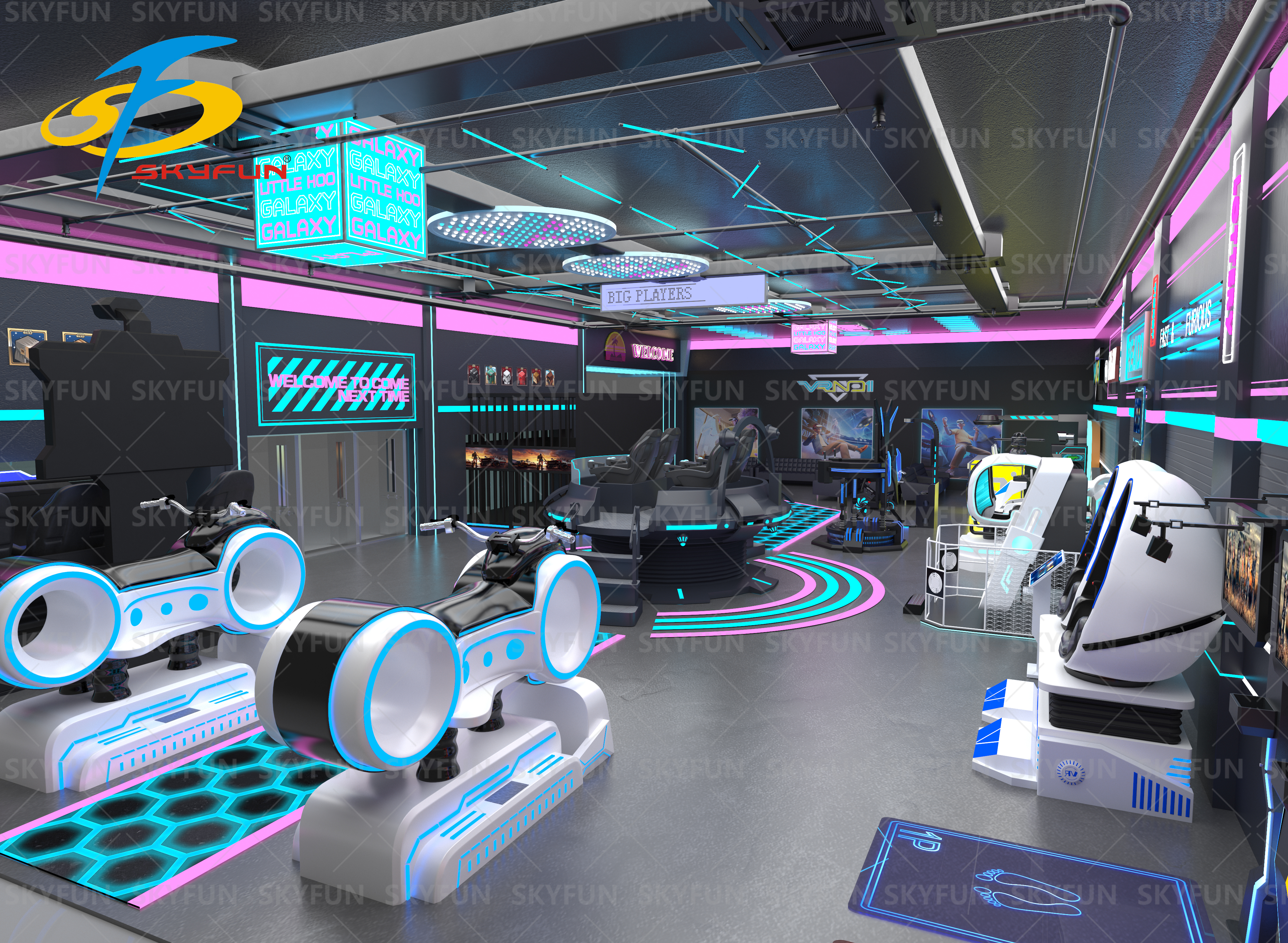
High upfront costs for VR hardware and maintenance remain a challenge, especially for small operators. Without economies of scale, achieving profitability can be difficult.
VR attractions require trained staff, regular maintenance, and strong safety protocols. Ensuring smooth daily operations is critical to maintaining positive VR consumer insights.
Consumers demand variety, but developing new VR content is costly and time-consuming. Operators who fail to refresh content risk declining repeat business.
Data-driven personalization will shape the next wave of VR entertainment trends. Systems that adapt content based on age, preferences, and play history will enhance customer satisfaction.
The integration of VR with AR and online platforms will create hybrid experiences, allowing players to connect across both physical and digital spaces. This trend opens new revenue streams for operators.
Rapidly developing regions in Southeast Asia, the Middle East, and Africa present major opportunities. As infrastructure improves, these areas are expected to contribute significantly to global VR arcade market demand.
Focus on high-growth regions and segments with proven demand, such as family entertainment centers and VR arcades. Long-term profitability depends on diversifying offerings.
Optimize operational efficiency and focus on customer experience. Regularly updating content and ensuring safety are critical to maintaining positive VR consumer insights.
Collaboration with operators and hardware providers will be essential. Continuous innovation in storytelling, interactivity, and design will keep consumers engaged.
The VR arcade market demand is expanding rapidly, supported by technological advancements, cultural shifts, and consumer appetite for immersive experiences. While challenges remain, opportunities for investors, operators, and developers are immense. The next decade will define how VR arcades integrate into mainstream entertainment worldwide.
For businesses considering investments in VR arcades, simulators, or theme parks, choosing the right partner is critical. Skyfun provides professional VR and arcade equipment solutions, helping clients design, install, and operate successful attractions.
🌐 Website: www.skyfunvr.com
📱 WhatsApp: +86 181 4485 8588