Popular vr machine supplier specialize in manufacturing arcade game simulator for 13+ years- SKYFUN



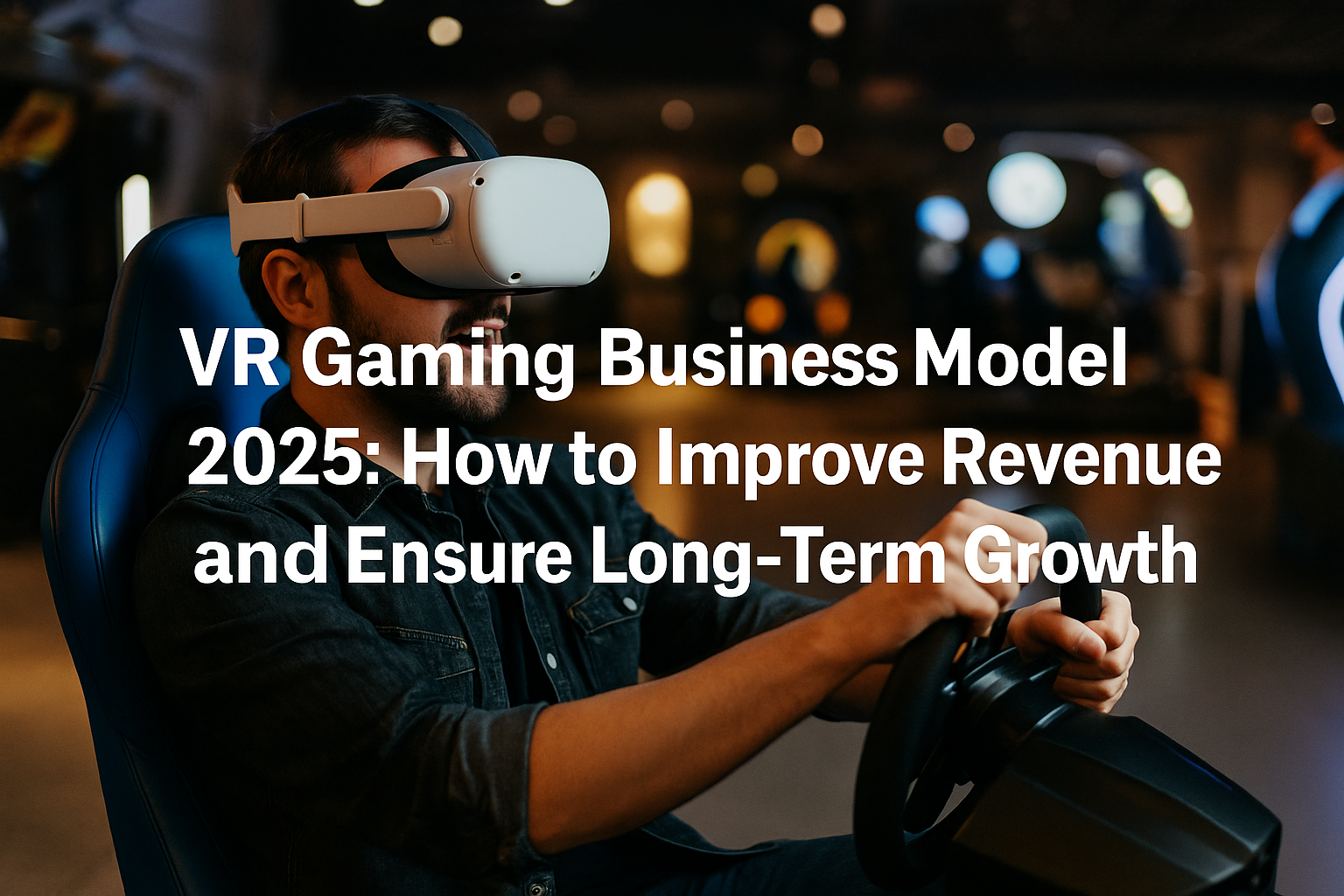
VR Gaming Business Model 2025: How to Improve Revenue and Ensure Long-Term Growth
Global Overview of the VR Gaming Industry in 2025
Market Growth and Scale
The VR entertainment sector is now one of the fastest-growing segments in digital media. Asia-Pacific leads the way, accounting for 45% of total market share, followed by North America and Europe. This growth is driven by improved accessibility of VR hardware, increased 5G connectivity, and the expanding presence of location-based entertainment venues. Such trends create new opportunities for VR revenue growth across multiple business models.
Key Drivers of Expansion
Technological Innovation: The rise of AI, cloud rendering, and haptic feedback has made VR experiences more realistic and affordable.
Social and Cultural Shifts: Younger consumers value shared immersive experiences over traditional gaming.
Investment Surge: Venture capital and public funding continue to flow into VR startups, fueling innovation and scalability.
Understanding the VR Gaming Business Model 2025
Core Components of a Profitable Model
A successful VR gaming business model 2025 relies on three revenue pillars:
Hardware Revenue: Sales or leasing of VR equipment such as headsets, motion simulators, and controllers.
Software Revenue: Income from VR game titles, content updates, and licensing agreements.
Experience Revenue: Pay-per-play, membership subscriptions, and event-based VR experiences.
B2B vs. B2C Models
The VR profit strategy differs depending on whether the business serves consumers directly (B2C) or supplies to entertainment venues (B2B). B2C models rely on game sales and subscriptions, while B2B focuses on VR arcades, malls, and amusement parks offering immersive experiences through rented or shared equipment.
Integration with Location-Based Entertainment
Many VR operators now integrate with theme parks and entertainment complexes. This approach allows businesses to attract a wider audience while optimizing asset utilization. The VR gaming business model 2025 thus emphasizes hybrid experiences — combining online content updates with physical installations to drive long-term VR revenue growth.
VR Profit Strategy: How Operators Increase Earnings
Diversifying Revenue Streams
One key VR profit strategy is diversification. Successful VR centers often combine single-player and multiplayer experiences, introduce seasonal events, and sell exclusive digital collectibles. Monthly subscription models have been shown to increase customer retention by 40%, while branded collaborations generate additional advertising income.
Optimizing Operational Efficiency
Profitability also depends on cost control. High-durability VR simulators, energy-efficient designs, and automated maintenance systems significantly reduce operating costs. Some companies now use AI-powered analytics to predict hardware wear and optimize scheduling, resulting in better utilization rates and faster ROI.
Example Case: Membership-Based Growth
A VR arcade chain in Japan implemented a membership-based pricing model, offering exclusive content and loyalty rewards. Within six months, their customer return rate increased by 35%, proving that flexible pricing is a cornerstone of VR revenue growth.

Sustainable VR Business: Building for the Future
Technology Innovation for Longevity
A sustainable VR business requires continuous innovation. Modular equipment designs, cloud-connected platforms, and XR hybrid systems are helping operators upgrade content remotely and extend equipment lifecycles. These advances ensure long-term profitability without excessive reinvestment.
Environmental and Economic Responsibility
Eco-conscious practices are also becoming important for sustainability. Manufacturers are adopting recyclable materials and energy-efficient power systems, reducing both operational costs and environmental impact. This approach appeals to a growing demographic of environmentally aware consumers.
Long-Term Customer Engagement
The best VR gaming business model 2025 strategies prioritize customer engagement beyond single experiences. Loyalty programs, social leaderboards, and co-op modes encourage repeat visits. Educational and cultural applications of VR further expand target demographics, ensuring steady VR revenue growth over time.
Challenges in the VR Gaming Business Model 2025
❀ High Initial Costs: Quality VR hardware and space setup require substantial upfront investment.
❀ Content Diversity: Players quickly tire of repetitive content; frequent updates are essential.
❀ Technical Maintenance: Continuous calibration and staff training are necessary for safety and performance.
❀ Market Competition: Increasing numbers of VR arcades make innovation the key differentiator.
Case Studies: Successful Global VR Operators
Japan – Immersive VR Theme Park Experience
Japan’s leading VR theme park attracted over 800,000 visitors in 2024 by combining motion rides, 4D simulators, and esports zones. By rotating content monthly, they achieved sustainable VR revenue growth and strong brand loyalty.
North America – Esports-Based VR Centers
Esports-focused VR centers in the U.S. adopted competitive gaming tournaments as part of their VR profit strategy. Entry fees, sponsorships, and live streaming generated new income streams, demonstrating the potential of hybrid physical-digital business models.
China – Integrated VR Arcades and Theme Parks
China’s integrated VR gaming business model 2025 combines arcade machines, educational simulators, and multiplayer attractions under one roof. Operators report 30% higher utilization rates due to cross-category engagement.
Future Trends in the VR Gaming Business
Cross-Platform Experiences
The future of sustainable VR business lies in merging VR with AR and MR to create seamless multi-platform ecosystems. Players will soon enjoy experiences that connect online communities with physical installations.
Subscription and Cloud Gaming
Subscription-based access will redefine the VR gaming business model 2025. Cloud VR allows players to stream content directly, reducing the need for high-end local hardware while increasing operator control and profit margins.
Metaverse and Virtual Economy
The integration of metaverse elements introduces new forms of monetization, from digital assets to virtual events. Operators who adopt these ecosystems early will see accelerated VR revenue growth and audience expansion.
Conclusion
The VR gaming business model 2025 reflects a dynamic intersection of technology, creativity, and entrepreneurship. Success in this market requires more than investment—it demands a clear VR profit strategy, commitment to innovation, and a focus on sustainability. As global adoption accelerates, the businesses that adapt quickly and provide unforgettable immersive experiences will lead the next generation of entertainment.
The future of VR gaming is bright, and with the right combination of innovation, efficiency, and user engagement, the industry is poised to achieve long-term VR revenue growth and establish a truly sustainable VR business ecosystem.
As one of the professional manufacturers in the global VR industry, Skyfun provides complete VR arcade and simulator solutions — from customized machine design to full venue planning and technical support. With more than a decade of experience serving clients in over 80 countries, Skyfun helps operators and investors build profitable, long-term VR gaming business models that balance innovation with reliability.
🌐 Visit: www.skyfunvr.com
📱 WhatsApp: +86 181 4485 8588


Guangzhou Skyfun Technology Co.,Ltd is a producing & marketing management site co- integrated industrial company which specialized in VR Arcade(Game Machine) products.
Feel Free To Contact Us
E-mail: sunnyzhang@skyfungame.com
Telephone: +86 18127818571
WhatsApp: +86 18127818571
Address:15th floor,3# building, Aoyuan, Wanbo 1st Road, Panyu District,Guangzhou
No.9,BangJiang East Village Section, Fuyi Road, Panyu District,,Guangzhou City